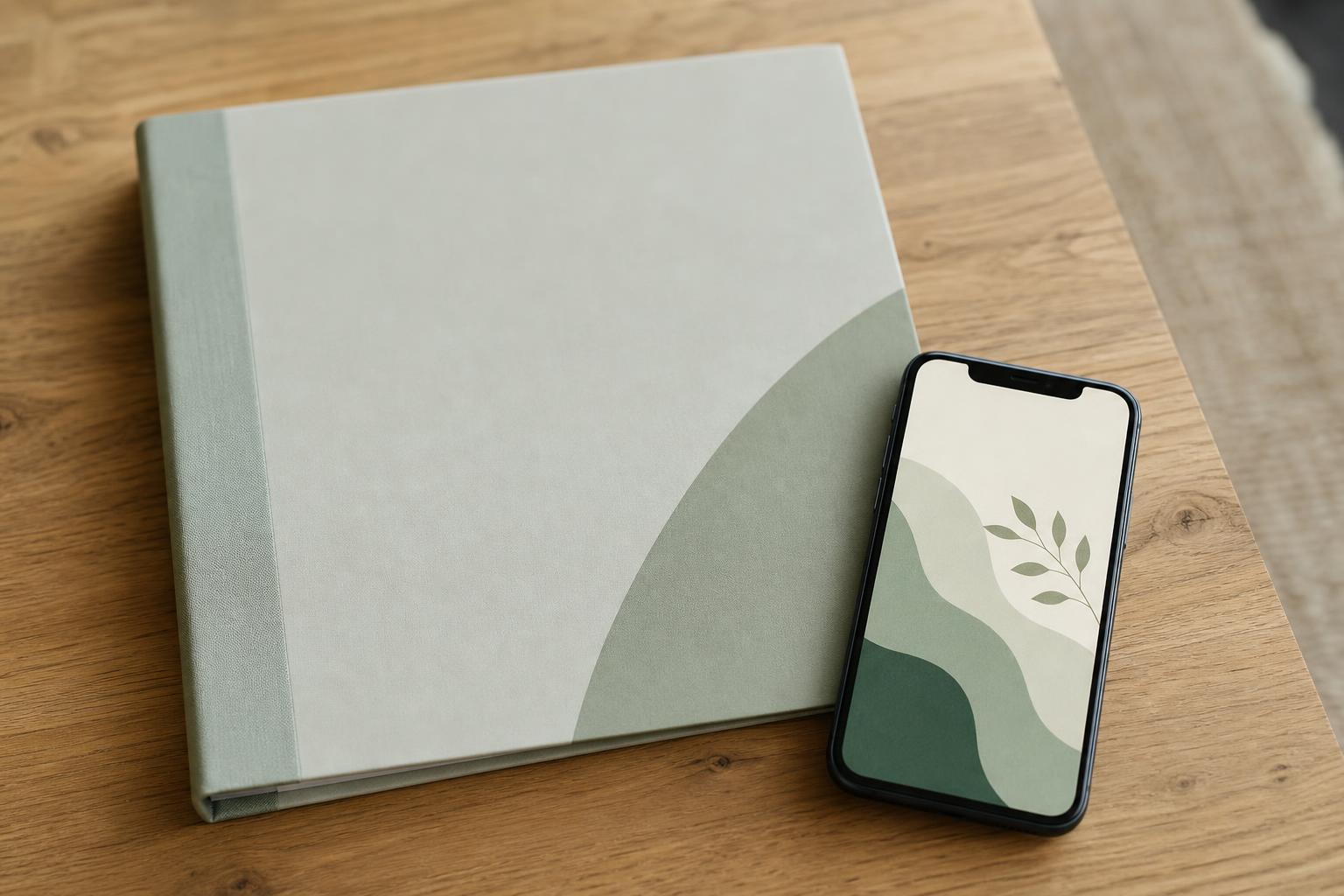
Your beautifully bound welcome book sits on the coffee table gathering dust while your guests frantically Google wifi passwords on their phones. The reality is that printed guides, no matter how well-designed, simply can't keep pace with how travelers access information today. A digital guest guide transforms the guest experience by delivering real-time, searchable information exactly when and where it's needed, while simultaneously reducing your workload and environmental footprint.
The shift from paper to digital isn't just about following trends. It's about meeting fundamental expectations that modern travelers bring to every booking. When guests can instantly search for "checkout time" at 6 AM or access GPS coordinates for parking while sitting in their car, you eliminate friction that leads to frustrated messages and negative reviews.
Ready to eliminate outdated welcome books? Create a digital guide that updates instantly and works on every guest's phone.
Start for freeReal-Time Updates Without Reprinting Costs
Digital guides sync changes instantly across all your properties without printing a single page or making a single phone call. When your wifi password changes, your favorite breakfast spot closes for renovations, or you update house rules, guests immediately see accurate information on their devices. This eliminates the awkward situation where guests follow outdated instructions from a printed book that cost you hundreds to produce just six months ago.
Why printed books become outdated overnight
Printed welcome books become obsolete the moment circumstances change. A restaurant recommendation becomes embarrassing when that spot closed three months ago. Door codes you printed in January no longer work after your February security update. Seasonal information about the nearby farmers market (Saturdays, May through October) sits there confusing guests who arrive in December. Every printed page represents a commitment to information that might be wrong tomorrow.
The frustration multiplies across properties. If you manage three rentals, updating one piece of information means reprinting and replacing books in three locations. Miss one property during your update rounds, and you've created an inconsistent guest experience that damages your professional reputation.
The hidden cost of manual updates
Reprinting welcome books costs between $200 and $500 per batch when you factor in professional design, quality printing, binding, and the time spent coordinating everything. Multiply that by the number of times information changes each year (wifi passwords, seasonal recommendations, rule updates, emergency contacts), and you're looking at thousands in recurring costs. These expenses directly impact your profit margins without adding any incremental value to the guest experience.
The time investment often exceeds the financial cost. Driving to each property to swap out pages or entire books consumes hours that could be spent on revenue-generating activities. Coordinating with cleaning staff to ensure they place updated books correctly adds another layer of complexity to your operations.
How digital guides sync instantly across properties
Update your digital guide once, and every current and future guest sees the change immediately on their phone. Change your checkout time from 10 AM to 11 AM across fifteen properties in thirty seconds. Add a new restaurant recommendation that appears for guests checking in tonight and those arriving next month. This scalability becomes invaluable as your portfolio grows, and platforms like One Guest Guide make management centralized and effortless.
How Do Guests Actually Access Information During Their Stay?
Guests pull out their phones first, not printed materials, whenever they need information during their stay. Research shows that 78 to 85 percent of short-term rental guests rely primarily on mobile devices to access property details, local recommendations, and house instructions. Your beautiful printed book might get a quick flip-through, but when guests urgently need the garage code at 11 PM or want restaurant suggestions while walking downtown, they're searching digitally.
Search functionality vs page flipping
Digital guides let guests type "wifi" and instantly find the password, while printed books require reading through multiple pages or checking an index (if one exists). When someone needs to know trash pickup day or whether beach towels are included, a five-second search beats five minutes of page-flipping. This speed matters enormously during high-stress moments like late-night arrivals or early-morning checkouts.
Consider what guests actually wish hosts knew. They want instant answers to specific questions, not comprehensive reading material. Digital guides match this need perfectly by allowing pinpoint information retrieval rather than sequential reading.
Offline access and GPS integration
Modern digital guides work without internet connection once initially loaded, addressing the "what if there's no signal" concern. More importantly, they integrate with phone GPS to provide turn-by-turn directions to your recommended hiking trail or that perfect coffee shop. Printed maps with hand-drawn directions can't compete with clickable addresses that launch navigation apps automatically. Guests appreciate technology that reduces friction rather than adding steps to their vacation experience.

Sustainability and Guest Expectations
Digital guides eliminate paper waste entirely while meeting the environmental expectations that an increasing percentage of travelers now consider non-negotiable. Every printed welcome book represents trees, ink, energy for printing, and eventual landfill waste, while digital alternatives have essentially zero environmental footprint beyond the devices guests already carry.
The environmental cost of printed materials
A typical 20-page color welcome book uses resources equivalent to approximately 0.05 trees when you account for paper production, printing, and binding. Across hundreds of guest stays and multiple annual updates, these impacts accumulate significantly. The printing industry consumes substantial water and energy while generating chemical waste from inks and coatings. Laminated pages and plastic binding materials often aren't recyclable, sending your well-intentioned guest information directly to landfills.
What millennial and Gen Z travelers demand
Younger travelers increasingly make booking decisions based on sustainability practices, with 62 percent preferring properties offering digital-only onboarding over paper alternatives. These guests view printed materials as wasteful rather than thoughtful. They expect hosts to leverage technology that reduces environmental impact, and hospitality sustainability trends show this preference intensifying year over year.
Digital guides signal that you're a forward-thinking host who respects both guest preferences and environmental responsibility. This perception directly influences reviews, with eco-conscious guests more likely to leave positive feedback when they see sustainable practices implemented throughout their stay.
How eco-friendly practices boost reviews
Guests specifically mention sustainability efforts in positive reviews, noting digital guides as evidence of thoughtful hosting. These mentions improve your search ranking on booking platforms while attracting more environmentally conscious travelers who tend to be respectful guests. The relationship between sustainable practices and review scores creates a virtuous cycle that benefits your booking rates and revenue.
Time Savings and Operational Efficiency
Digital guides reduce the time you spend answering repetitive questions, updating information, and coordinating printed materials across properties. Hosts report that comprehensive digital guides cut guest message volume by 40 to 60 percent because guests find answers independently rather than texting about wifi passwords, parking instructions, or checkout procedures.
Reducing turnover time and staff questions
Cleaning staff and property managers spend less time fielding guest questions when information lives in an easily accessible digital format. Instead of interrupting turnover to explain where extra blankets are stored, your team focuses on preparing the property for the next arrival. This efficiency improvement becomes crucial during back-to-back bookings where every minute of turnover time matters.
Guest self-sufficiency also means fewer emergency calls during your off-hours. When someone can instantly search your digital guidebook for Airbnb to find troubleshooting steps for the TV remote or thermostat, you avoid unnecessary 10 PM interruptions.
Analytics that improve guest experience
Digital platforms show you which guide sections guests access most frequently, revealing what information matters most during stays. If 80 percent of guests search for parking instructions, you know to make that information more prominent and detailed. These insights let you continuously refine your guide based on actual behavior rather than assumptions, following Airbnb's guest experience guidelines for data-driven hosting.
Scaling across multiple properties
Managing ten properties with printed books means maintaining ten separate physical documents, coordinating updates across ten locations, and hoping cleaning teams place books correctly every time. Digital guides scale effortlessly because you manage everything from one dashboard. Create templates for common information, customize property-specific details, and push updates universally or selectively. This centralization becomes invaluable as your business grows beyond a single property.
Conclusion
The comparison between digital guest guides and printed welcome books reveals a clear winner for modern hosting. Digital guides deliver real-time accuracy, match how guests actually consume information, demonstrate environmental responsibility, and save substantial time and money. They transform your guest communication from static paper to dynamic, searchable content that works exactly how travelers expect in 2025.
The operational benefits extend beyond guest satisfaction into tangible business improvements. You'll spend less time answering repetitive questions, eliminate recurring printing costs, scale more easily across properties, and gather insights that continuously improve the guest experience. These advantages compound over time, making digital guides an investment that pays returns with every booking.
Making the switch doesn't require technical expertise or significant upfront investment. You can create your guest guide free and have it ready for your next check-in within hours rather than weeks. Your guests will appreciate the convenience, your operations will run more smoothly, and you'll wonder why you ever spent hours updating printed books that guests barely opened.