You've spent hours crafting the perfect Airbnb listing, staging your space beautifully, and setting competitive pricing. Then a guest hosts an unauthorized party, smokes inside, or brings three extra people without telling you. When you mention your house rules, they claim they never saw them. Sound familiar? The problem isn't that you don't have rules. It's that most guests never actually read them, or worse, they can't find them when they need them most.
The truth is, effective house rules aren't about covering yourself legally or creating an exhaustive list of don'ts. They're about creating clarity that prevents problems before they start. The best hosts know that how you present your rules matters just as much as what those rules say. Let's look at examples that actually work and where to put them so guests can't miss them.
Why Most House Rules Go Unread
Most Airbnb house rules go unread because guests are overwhelmed with information at exactly the wrong time. Understanding why this happens is the first step to fixing it, and it starts with recognizing how guests actually interact with your listing materials.
The 90-Second Rule Problem
Guests spend an average of 90 seconds or less reviewing house rules during the booking process. They're excited about their trip, comparing multiple properties, and mentally planning their vacation. Your detailed three-page document about quiet hours, parking procedures, and garbage disposal doesn't stand a chance against that psychological state. This is why brevity and strategic placement matter more than comprehensiveness.
The hosts who get the best compliance don't write longer rules. They write shorter, clearer ones and show them at multiple touchpoints throughout the guest journey. A digital guidebook allows you to present essential rules upfront while providing detailed information guests can reference later when they actually need it.
Where Guests Look for Information
Guests don't read linearly through your entire listing. They scan for specific information based on their immediate needs. Before booking, they're looking at photos, location, and price. After booking but before arrival, they want check-in details and WiFi passwords. During their stay, they need practical information like thermostat instructions and checkout procedures. Your house rules need to appear in all three contexts, not just buried in your listing description.
Common Mistakes That Get Rules Ignored
The biggest mistake hosts make is writing rules that sound like legal disclaimers. When you start with "Guests must not under any circumstances," you've already lost their attention. Other common problems include listing rules in random order, using all capital letters for emphasis (which reads as shouting), and failing to explain the why behind important rules. Guests are much more likely to comply when they understand that quiet hours exist because you have neighbors who work early shifts, not just because you said so.
Tired of guests missing your important house rules? Create a beautiful digital guest guide that puts all your essential information right at your guests' fingertips, exactly when they need it.
Start for freeEssential House Rules Every Airbnb Needs
Every successful Airbnb needs five core categories of house rules that cover the most common guest questions and prevent the most frequent violations. These aren't optional extras, they're the foundation of smooth operations regardless of your property type.
Quiet Hours and Noise Policies
Specify exact times for quiet hours and explain why they matter. Instead of "Be quiet after 10pm," try "Please keep noise to a minimum after 10pm and before 8am. We're in a residential neighborhood and our neighbors have early work schedules. We want to be good neighbors so we can keep hosting amazing guests like you." This approach gives context and appeals to guests' sense of community rather than just laying down the law.
Guest Count and Visitor Rules
Be crystal clear about maximum occupancy and whether daytime visitors are allowed. This prevents the awkward situation where guests invite friends over without realizing it violates your rules. A good example: "This space comfortably sleeps 4 guests (2 in the master, 2 on the sofa bed). The maximum occupancy is 4 overnight guests. You're welcome to have up to 2 additional daytime visitors, but please let us know in advance." Understanding what guests want from hosts helps you frame these rules in a way that feels welcoming rather than restrictive.
Smoking and Pet Policies
State your smoking policy clearly and specify whether it applies to all tobacco products, vaping, and marijuana where legal. For pets, don't just say "no pets." Explain that you have allergies, that previous guests have allergies, or that your HOA prohibits animals. When guests understand the reasoning, they're far less likely to try to sneak in exceptions.
Parking and Check-In Instructions
Parking and arrival procedures should be separate from general house rules because guests need this information at a specific time. Include them in your pre-arrival message and your check-in instructions, but also reference them in your main rules section. Specify exactly where guests can park, whether street parking requires permits, and what happens if they park in the wrong spot.
Property-Specific Safety Rules
Every property has unique safety considerations. If you have a pool, specify supervision requirements for children and rules about pool hours. For properties with fireplaces, explain how to use them safely. Mountain cabins need rules about wildlife and securing trash. Beach houses should address rip currents and water safety. These aren't just liability protection, they're genuine guest safety measures.
House Rules Examples That Work
Effective house rules are tailored to your specific property type and guest demographic, not copied from generic templates. Here are proven examples that get read and followed, organized by common property types.
Urban Apartment Rule Template
For city apartments, focus on noise, neighbors, and building-specific rules. Example: "Welcome to our downtown loft! To ensure everyone has a great stay: Quiet hours are 10pm to 8am on weekdays, 11pm to 9am on weekends. Our neighbors work from home, so please be mindful of noise during the day too. The building's front door locks at 9pm (your key works 24/7). Please don't prop open security doors. Guest parking is in spots 12 and 13 in the garage (access code: 4782). Street parking requires a visitor permit, available at the front desk."
Family Vacation Home Rule Template
Family properties should emphasize safety while maintaining a welcoming tone. Example: "We're so glad you're here! A few things to help your family have the best stay: The pool is open sunrise to sunset. Children under 12 must be supervised by an adult at all times. Pool toys are in the blue bin, please put them back after use. The game room is all yours, we just ask that you turn off the TV and gaming systems when you're done. Please keep the fireplace screen closed when the fire is burning. Our maximum occupancy is 8 guests. You're welcome to have family visit during the day, just give us a heads up."
Mountain Cabin Rule Template
Remote properties need rules about access, wildlife, and emergency procedures. Example: "Welcome to the mountains! Important information for your stay: The access road can be rough. High-clearance vehicles recommended in winter. Cell service is limited. WiFi password is MountainView2025. The cabin is bear country. Please store all food inside and use the bear-proof trash cans. Never approach wildlife. The wood stove is your primary heat. Instructions are on the wall (and in your digital guide). The backup generator kicks in automatically if power goes out. Emergency contact numbers are by the phone."
How to Frame Rules Positively
The language you use transforms how guests receive your rules. Instead of "No smoking anywhere on the property," try "This is a smoke-free home to ensure all our guests can breathe easy. There's a designated smoking area in the side yard with an ashtray provided." Replace "Checkout is 11am SHARP. Late checkouts will be charged $50/hour" with "Checkout is 11am to give our cleaning team enough time to prepare for the next guests. If you need a later checkout, just ask! We can often accommodate for a small fee if the calendar allows." This approach communicates the same boundaries without sounding aggressive.
Where to Display Your House Rules
The location of your house rules matters as much as their content because guests need to see them at multiple decision points throughout their journey. Strategic placement dramatically improves compliance rates.
In Your Airbnb Listing Description
Your listing description should include a condensed version of your most important rules. Keep this section to 5-7 bullet points maximum. Focus on deal-breakers like no smoking, no parties, and occupancy limits. This helps filter out incompatible guests before they book. You can always provide more detail in other locations, but your listing needs the essentials upfront.
In Your Digital Guest Guide
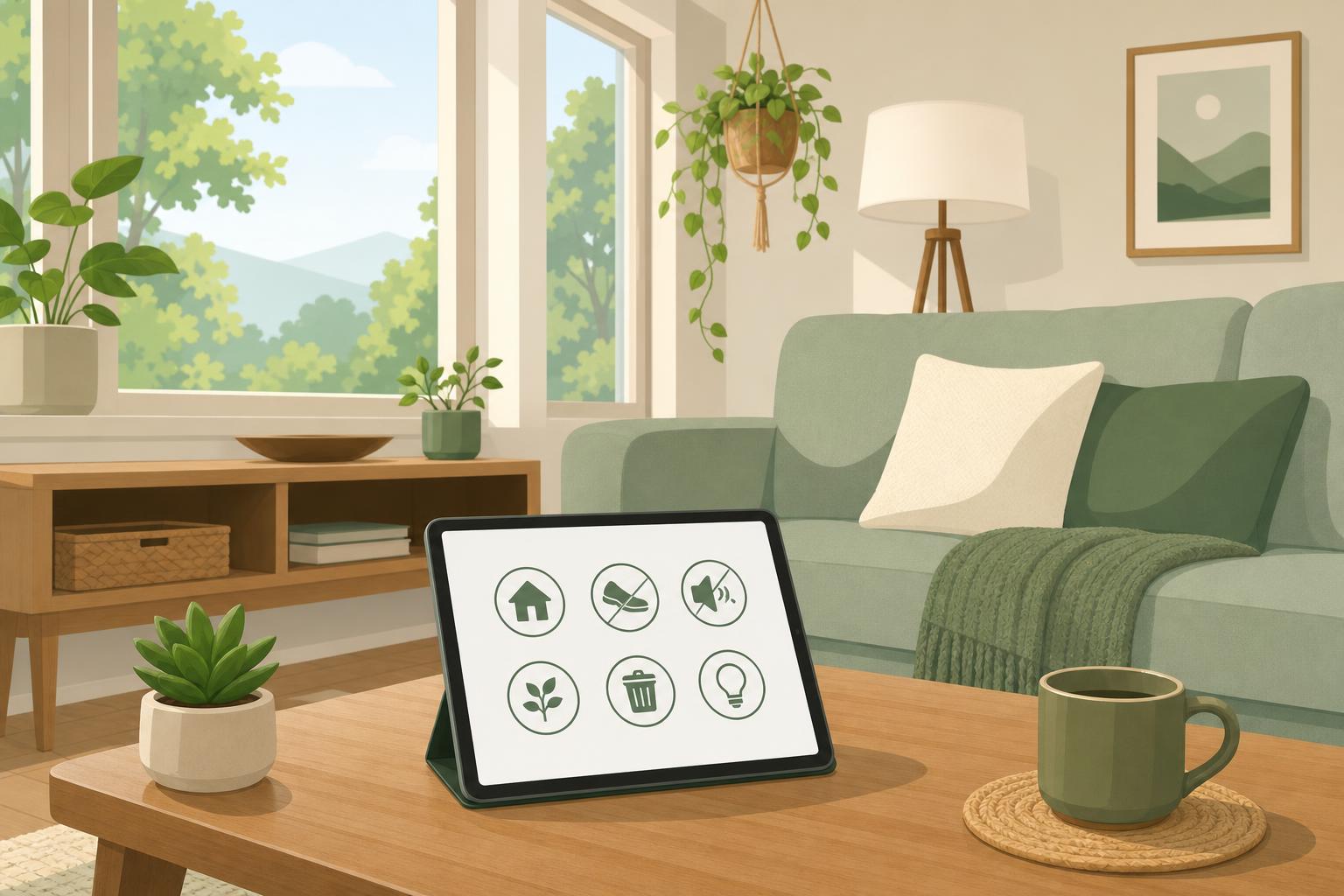
A digital house manual is the perfect place for your complete house rules with full context and explanations. Unlike a PDF that gets lost in email threads, a digital guide gives guests a single, bookmarkable link they can reference throughout their stay. You can organize rules by category, include photos that demonstrate what you mean, and update information instantly without reprinting anything. This is where you put the comprehensive version that includes everything from how to work the smart TV to what day trash pickup happens.
In Pre-Arrival Messages
Three to five days before arrival, send a message that highlights your most critical rules alongside check-in information. This is your last chance to ensure guests have seen your key policies. Keep it short and link to your full guide for details. Example: "Quick reminders for your stay: Maximum 4 guests, quiet hours after 10pm, no smoking inside. Everything you need is in your guest guide (link), including WiFi passwords and local recommendations!"
Physical Display Inside the Property
Even with perfect digital communication, you need physical reminders in the space itself. A small framed card with your top 5 rules near the entry serves as a gentle reminder. Put specific instructions where they're needed (pool rules by the pool, fireplace instructions by the fireplace). A printed version of your welcome book template can serve as a backup for guests who prefer physical materials, though your digital version should always be your primary reference.
Conclusion
House rules that guests actually read aren't about writing more or covering every possible scenario. They're about strategic communication that meets guests where they are in their journey. By understanding the 90-second rule problem and placing concise, clearly written rules at multiple touchpoints, you dramatically improve compliance without seeming demanding or unwelcoming. The most successful hosts know that effective rules feel like helpful guidance rather than legal warnings.
The key is matching your rule format to your property type and guest demographic, then displaying those rules where guests will actually see them. Whether you're running an urban apartment, a family vacation home, or a mountain retreat, the principles remain the same: be clear, be concise, explain the why behind your rules, and make them accessible at every stage of the guest experience. Physical signs inside your property provide helpful reminders, but digital guides ensure guests have comprehensive information available whenever they need it.
Ready to create house rules that guests will actually read and follow? Start building your digital guest guide today and give your guests a single, easy-to-access place for all your property information. Clear communication leads to better guests, fewer violations, and five-star reviews that highlight how easy you are to work with.